
A segment is a saved, named group of contacts or organisations filtered by criteria you choose. Segments are the main way to pull out a specific group — all civil society contacts in Queensland, for example.
Creating a segment
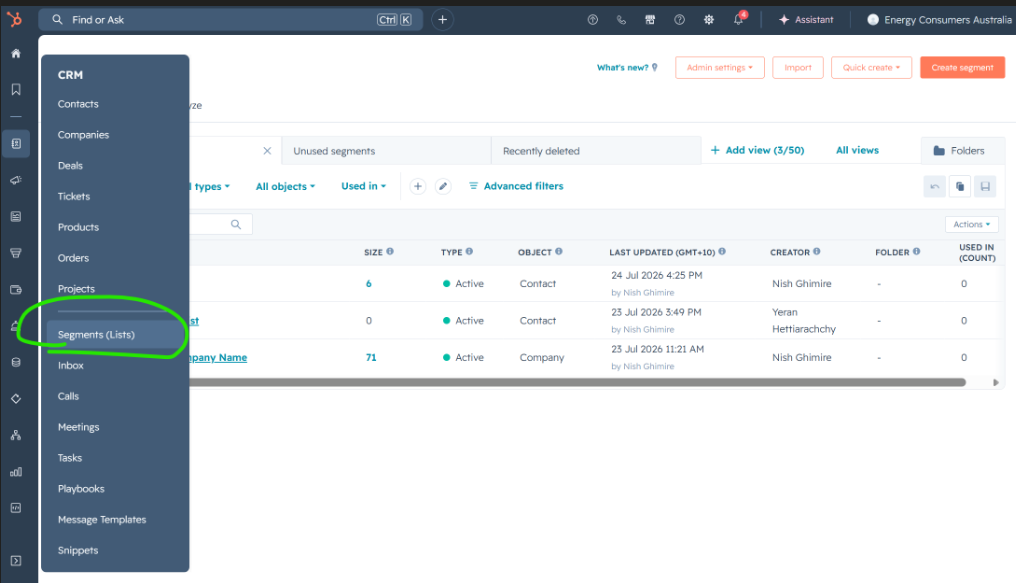
Step 1. In the left-hand menu, click CRM, then Segments (Lists).
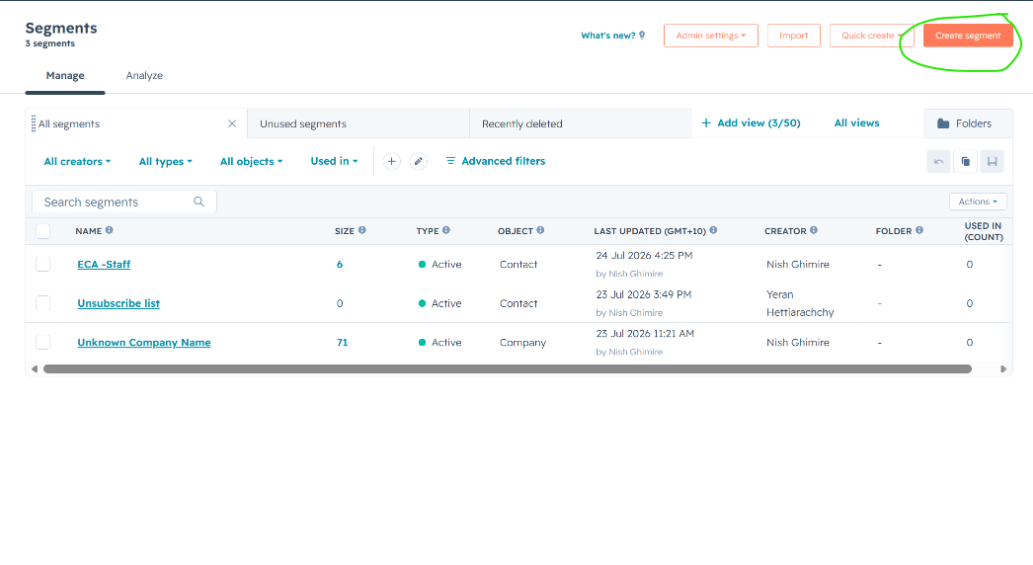
Step 2. Click the orange Create segment button.
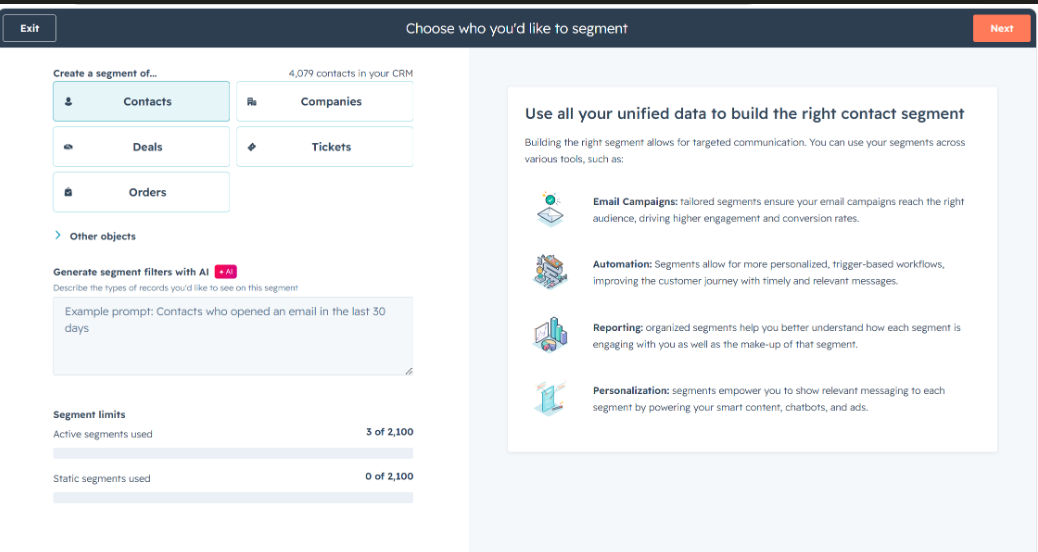
Step 3. Choose Contacts or Organisations, then click Next.
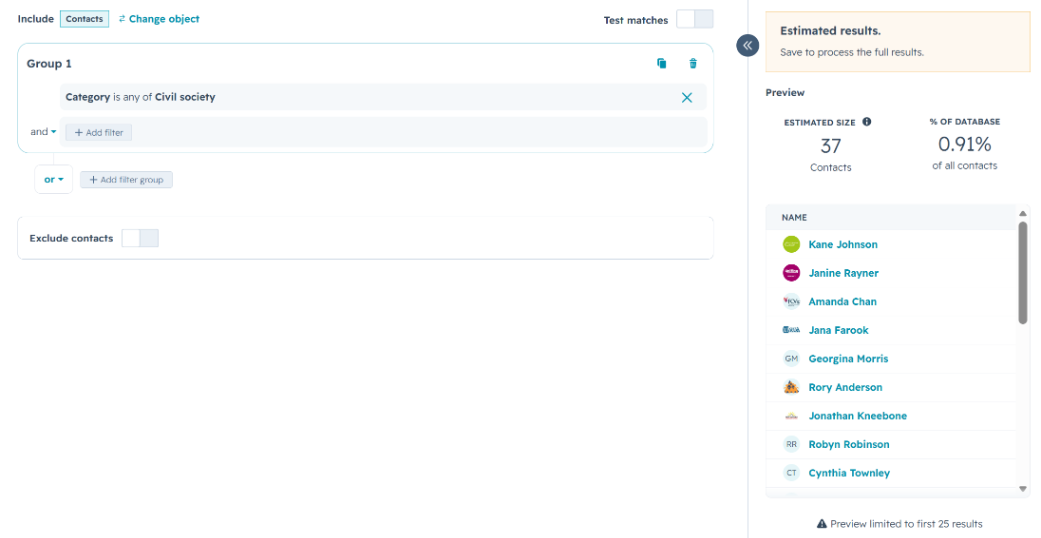
Step 4. Click Add filter and choose a property.
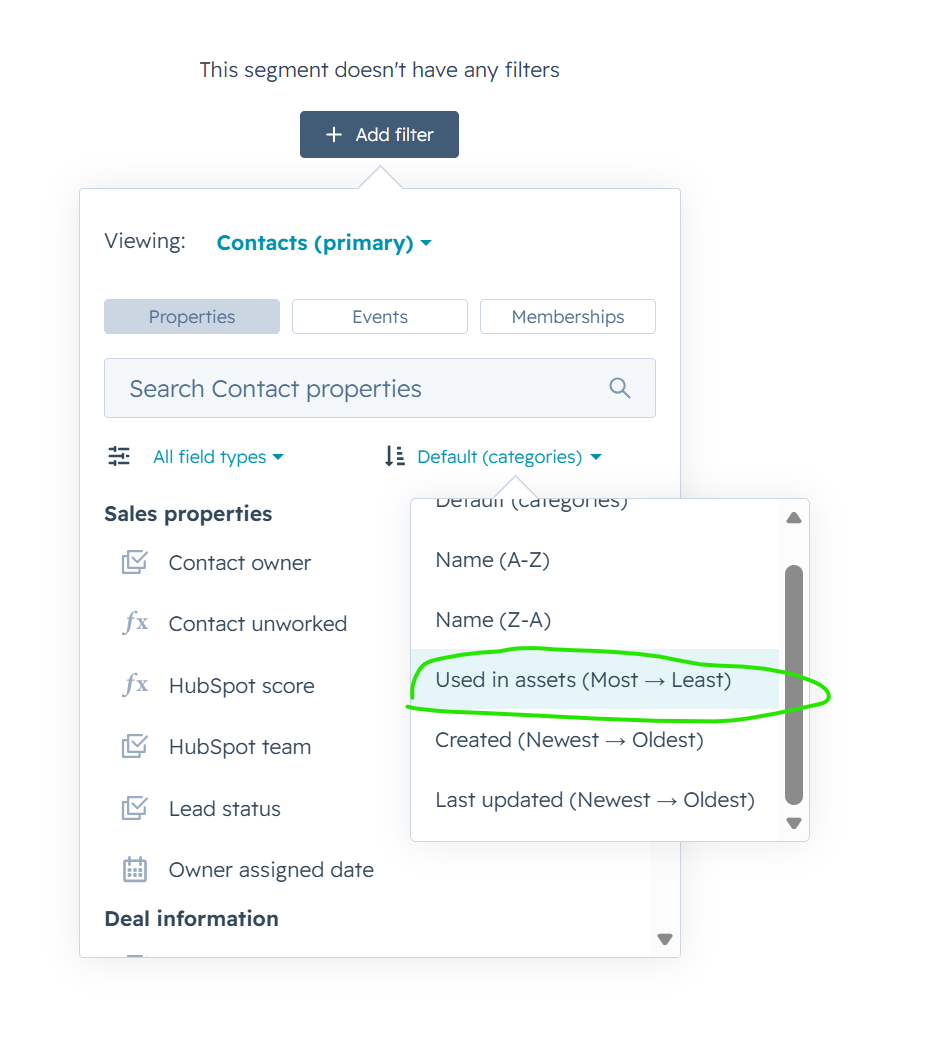
There are a lot of filters, and many aren't relevant to us. We can't remove them. A useful trick is to sort by Used in Assets (Most → Least) to bring the ones ECA actually uses to the top.
Start broad — Category or Jurisdiction are usually the right first filter. See How Contacts Are Categorised and Issues and Jurisdiction for what's available.
Combining filters: AND vs OR
This is the part that trips people up.
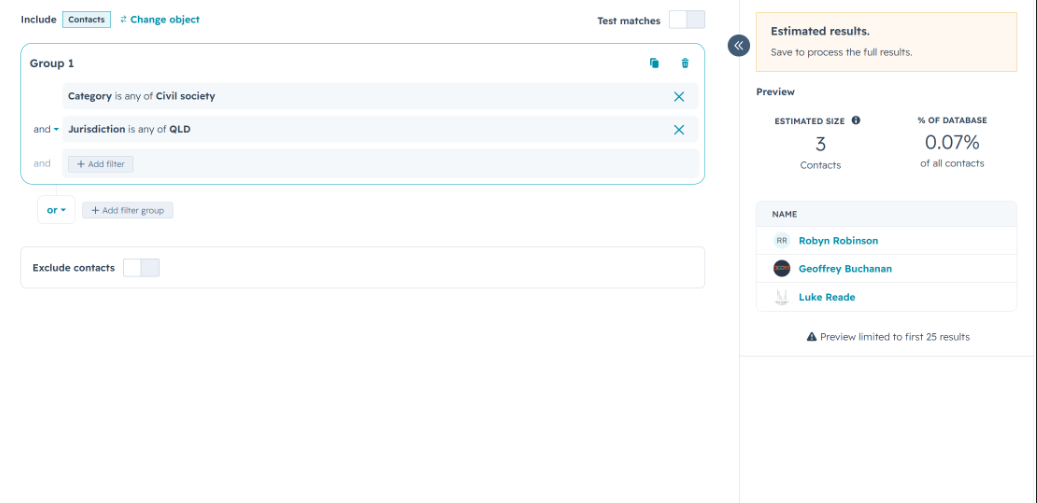
- AND — a record must meet every condition. Narrower results.
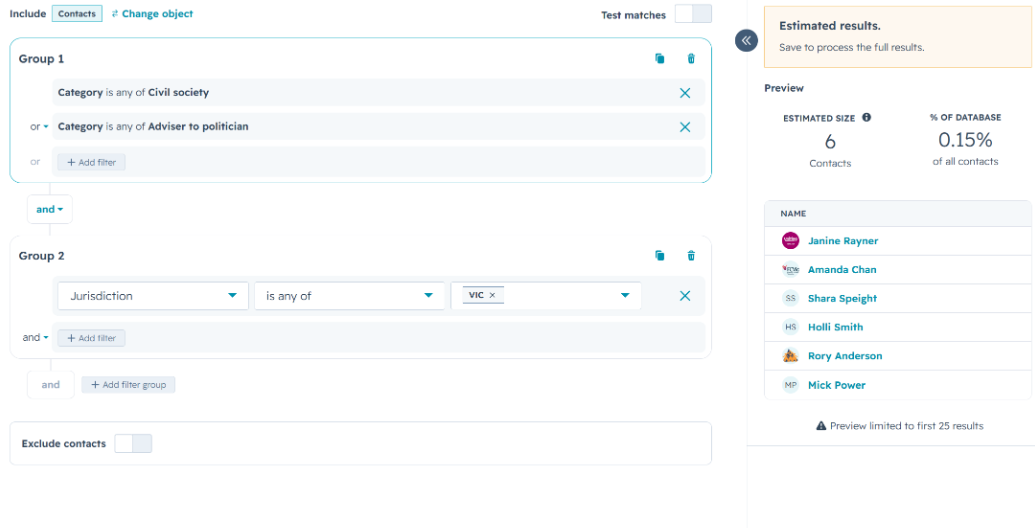
- OR — a record only needs to meet at least one condition. Broader results.
Example 1 — using AND: someone in civil society AND whose jurisdiction is QLD.
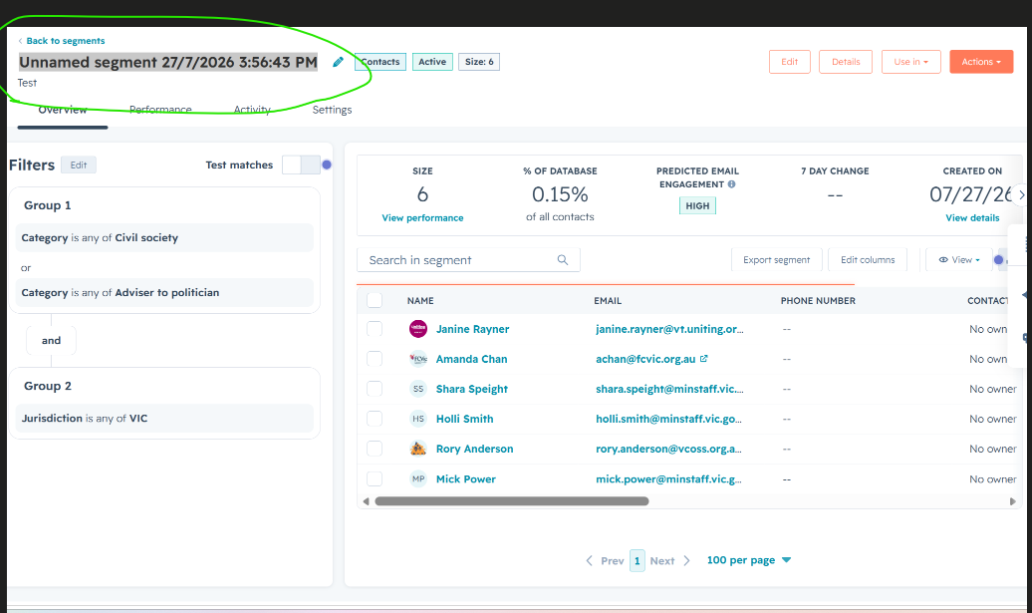
Example 2 — using OR: someone in civil society OR an adviser to a politician, whose jurisdiction is VIC.
Active or static?
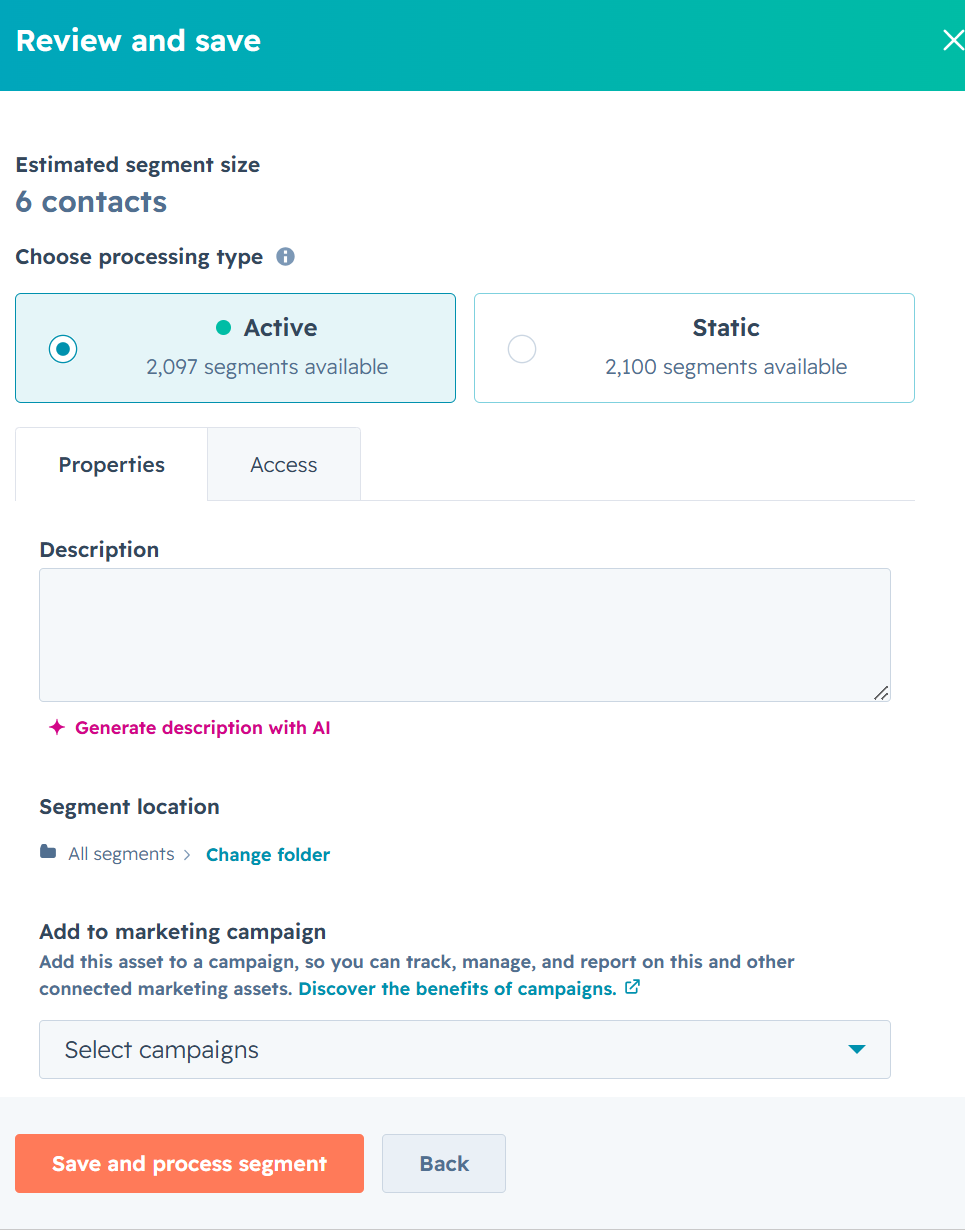
Step 5. Choose the processing type.
| Type | What it does |
|---|---|
| Active | Updates automatically as records change. New contacts meeting the criteria are added; contacts that no longer match drop out. |
| Static | A fixed snapshot. Doesn't update. |
We almost always want Active. Use static only for one-off imports or event-specific snapshots.
Always write a description. It's how everyone else understands what the segment captures. Without one, nobody can tell your segment apart from someone else's.
Step 6. Click Save and process segment, then give the segment a clear title.
Segments vs filters
A segment is saved and reusable. A filter is a temporary search on a list page that isn't saved. Filters are quicker; segments are more powerful. See How to Filter Records.
Related articles (link once published)
- How to Filter Records
- How Contacts Are Categorised
- Issues and Jurisdiction
- Glossary of Key Terms