
Logging meetings is a core function of Hive. The benefit over a plain note is that a logged meeting backdates to the exact date and time the meeting occurred, so it appears correctly in activity reports and dashboards.
Logging a meeting
Step 1. Open the contact's record and click Log meeting.
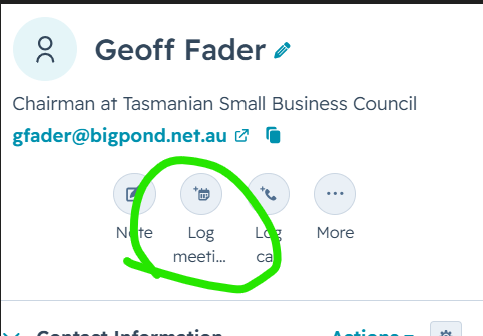
Can't see the button? You may need to reorder your activity buttons. Ideally you want Note, Log meeting, and Log call visible.
Step 2. Fill in the meeting details — attendees, meeting start time, and your notes.
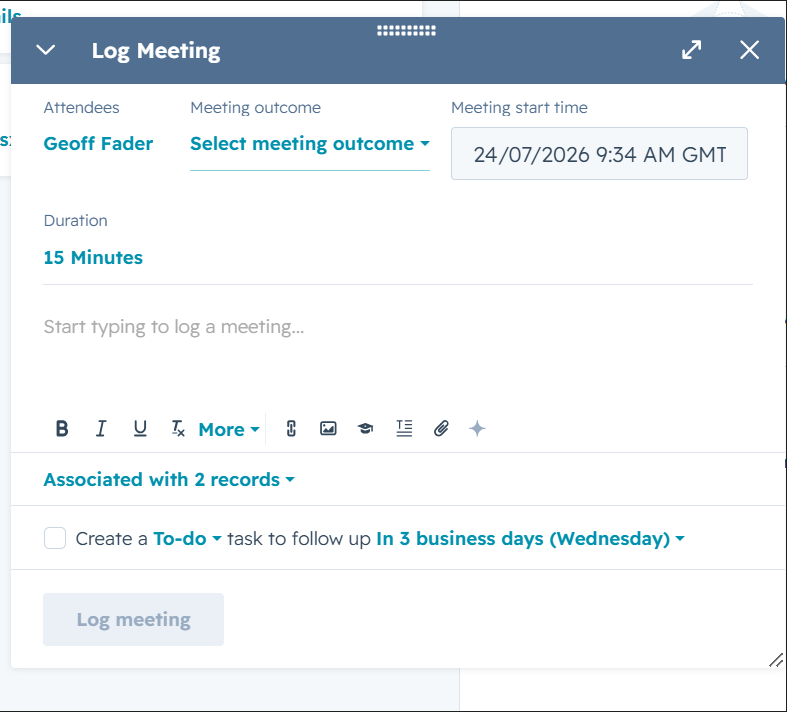
Check the meeting start time. It defaults to now — change it to when the meeting actually happened, or the reporting will be wrong.
You can tag colleagues in the notes using @. They'll receive a notification.
You don't need to fill in Meeting outcome or Duration. These fields are fixed in the system and can't be removed. Leave them as they are.
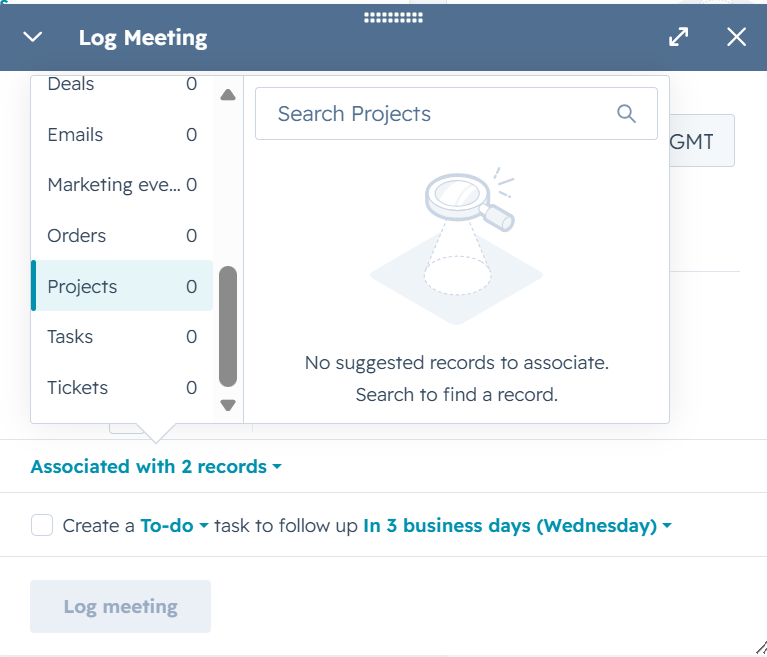
Step 3. Check what the meeting is associated with using the Associated with dropdown. From August 2026 you'll also be able to associate meetings with Projects.
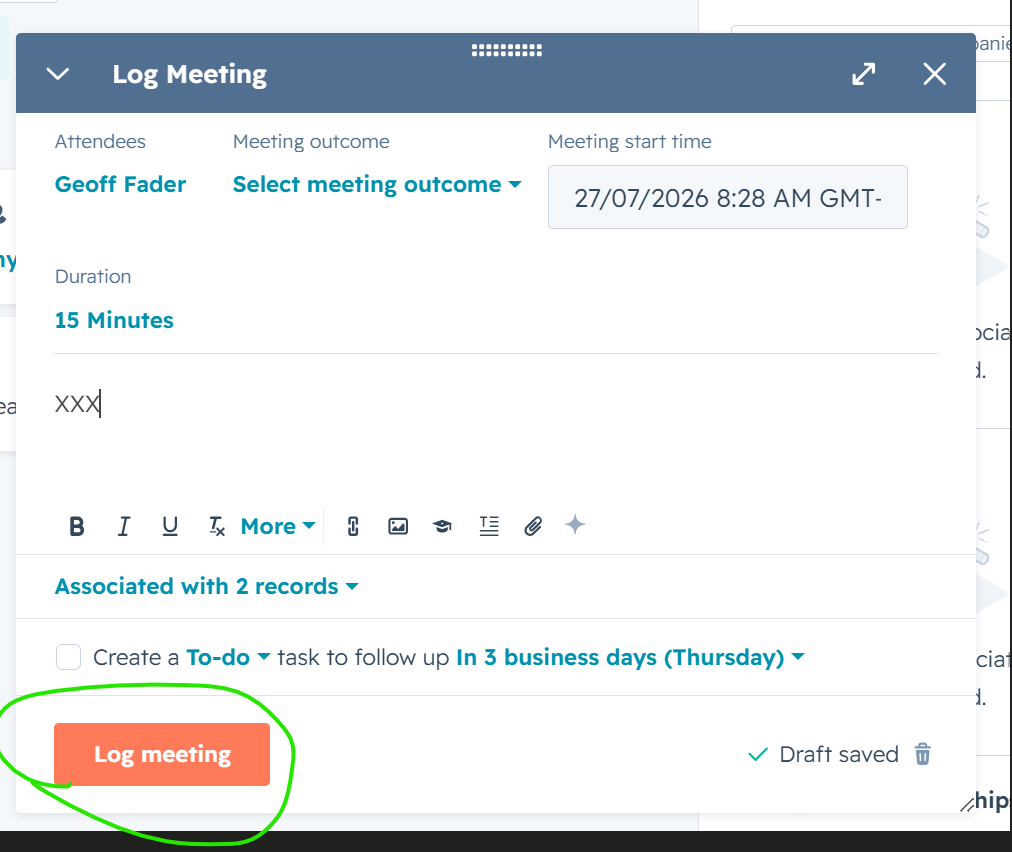
Step 4. Click Log meeting.
What to put in your notes
Follow this structure:
- Executive summary — 2–3 sentences covering the purpose and key takeaways.
- Stakeholders present — internal and external attendees.
- Key discussion points — bullet points, with key themes or ECA objectives in bold. Group by topic if the meeting covered multiple policy areas.
- Action items and next steps.
Log by the end of the week. Set aside time each week to write up meeting notes.
Before logging, it's good practice to send a draft to other attendees for corrections.
See Ways of Working for who's responsible for logging notes from different meeting types.
Related articles (link once published)
- Ways of Working
- How to Log Emails in Outlook
- Glossary of Key Terms