
Logging information into Hive
Activities
Everyone is required to log activities that relate to any intelligence or information you have related to an advocacy project or ECA's work. This builds up the intelligence power of the platform.
Generally, judgement is required about whether something reaches the threshold of logging in Hive.
Types of activities to log:
- Meetings
- Phone calls
- Intelligence gathered from a stakeholder event
- Emails
Do not log:
- Day-to-day administrative coordination (e.g. correspondence shifting a meeting from 2pm to 3pm)
- Non-work interactions
How should I log different activities?
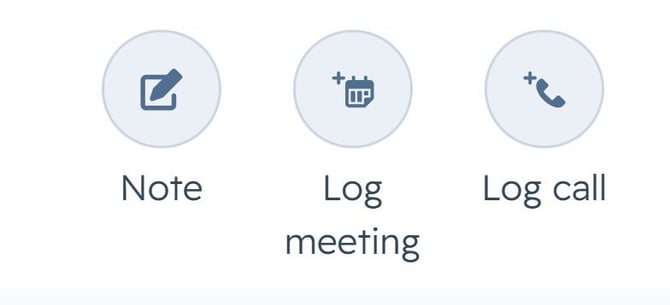
- Log all meetings as "Log meeting." This pinpoints the exact date of the meeting and helps with dashboards and insights (e.g. number of meetings over the past month).
- Log "Notes" when capturing unstructured context, strategic insights, and internal context that aren't tied to a specific calendar event.
- Log phone calls as "Log call" — such as when you're talking with an adviser about an amendment to a bill. This also benefits reporting.
- You can log emails directly in Outlook on an opt-in basis.
What should be included in notes from a meeting?
When logging an activity such as a meeting, follow this general structure:
- Executive summary — a 2–3 sentence overview of the meeting, including the purpose and any key takeaways.
- Stakeholders present — the names of relevant stakeholders and attendees, internal and external.
- Key discussion points — use bullet points. Bold key themes or ECA objectives that were covered. Group by topic if the meeting covered multiple policy areas.
- Action items and next steps.
Who is responsible for logging meeting notes?
- When there are meetings with multiple ECA staff members, it is good practice to agree on who is responsible for typing up and logging the notes.
- Some meeting types have a default owner:
- For regular meetings with jurisdictions, the EM Government Relations is responsible.
- When the CEO meets with stakeholders, the EA to the CEO is responsible for updating Hive.
- It is good practice to send a draft via email for revisions or corrections from other attendees before logging the note in Hive.
- Typically, this should be logged by the end of the week. Set aside time in your calendar each week to update meeting notes in Hive.
Who is responsible for updating new contacts or organisations?
If, while logging an activity, you discover that a contact or organisation isn't in Hive, it is your responsibility to create it. For example, if you attend a DCCEEW roundtable and meet a new DCCEEW staff member, it's on you to add them. Include as much information as possible, including job title and team.
There is no individual "contact owner" in Hive — everyone is collectively responsible for maintaining the CRM. That said, each team is responsible for data quality across their broad stakeholder constituency:
| Group of stakeholders | Responsible for keeping the list broadly accurate |
|---|---|
| Politicians and advisers | EM, Government Relations |
| Departments | EM, Government Relations |
| Market bodies and regulators | EM, Government Relations |
| Newsletter subscribers | SM, Communications and Engagement |
| Media | SM, Media Manager |
| Civil society | Community team |
| Ombudsman | Community team |
Updating contacts when they change jobs
People move around the energy sector regularly. It is everyone's responsibility to update a contact's details when you become aware someone has changed jobs — internally or externally — and it hasn't yet been updated in Hive.
Confidentiality and sensitivity requirements
- Write all notes on the assumption that these records could eventually enter the public domain. Keep language objective, professional, and respectful.
- Do not log highly sensitive or restricted information in Hive, such as Cabinet in Confidence information — it is accessible by most ECA staff. Keep this information to a select group on a need-to-know basis, and log it only once it enters the public domain.
- The Leadership Team and system administrators have access to a property on each contact where they can add and read sensitive information, labelled "Sensitivities." This will be used sparingly.
Norms around sending emails from the marketing inbox
- A select number of ECA staff have access to ECA's mailing list and can send bulk emails — for example, newsletters or event invitations.
- Bulk emails require clearance from SM Communications and Engagement, and final sign-off from GM, Public Affairs & Strategy.
Related articles (link once published)
- What to Do If You Have a Problem
- How to Log a Meeting
- How to Log Emails in Outlook